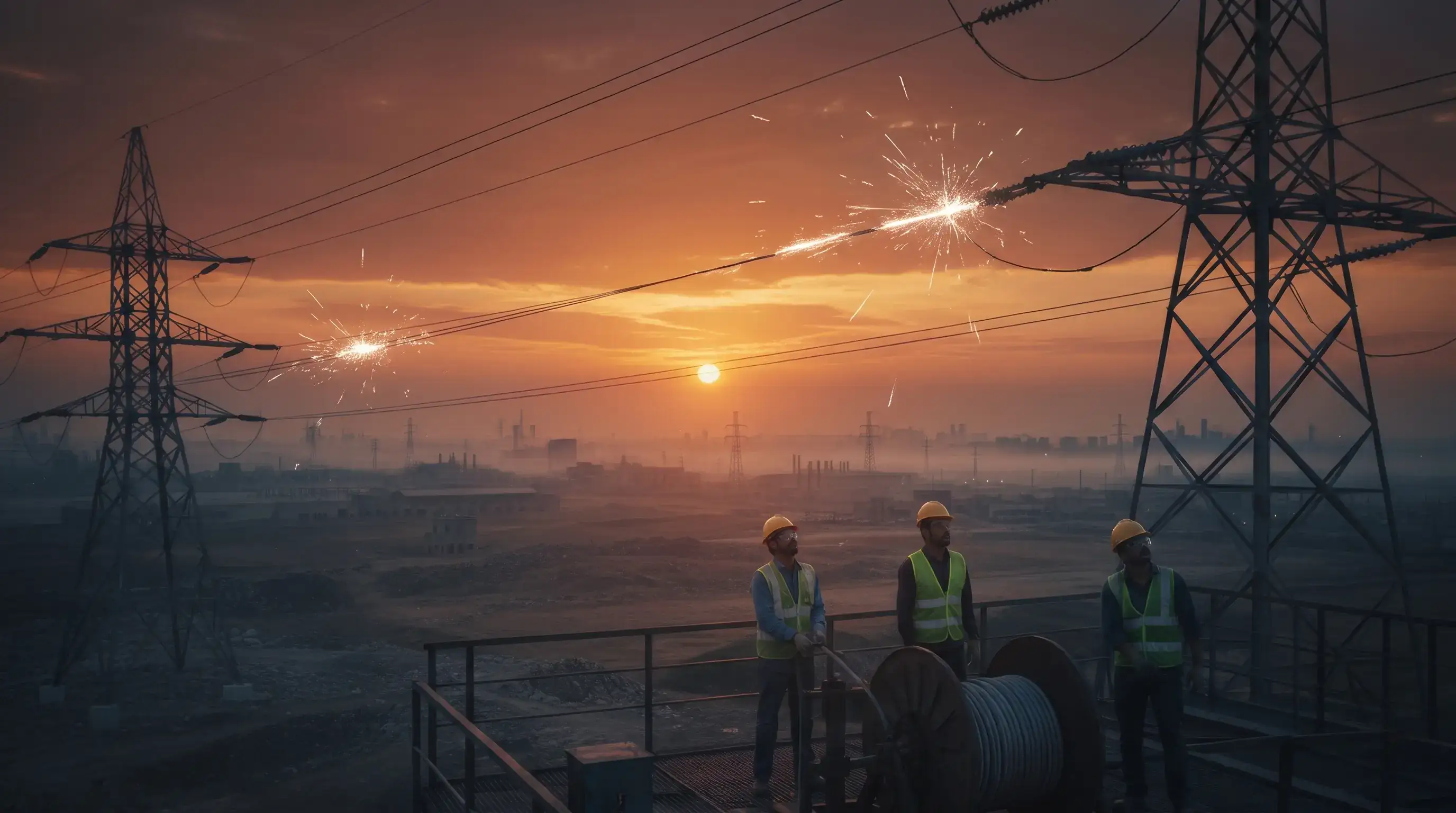
Electrical faults represent the single largest cause of industrial and commercial fires across Pakistan. From the catastrophic factory blaze at Baldia Town in Karachi to recurring plaza fires in Lahore and textile unit incidents in Faisalabad, investigations consistently point toward short circuits, overloaded switchgear, and degraded insulation. In industrial clusters like Sundar, SITE, and the M-3 Industrial City, electrical systems operate under extreme ambient temperatures exceeding 45°C during summer, accompanied by frequent voltage fluctuations and power cuts. Operating under these conditions without rigorous safety measures turns basic electrical infrastructure into a high-risk liability. Preventing loss of life, structural damage, and operational downtime requires an uncompromising approach to electrical fire safety that integrates strict design standards, early detection, and rapid suppression.
Major Causes of Electrical Fires in Pakistani Facilities
The root causes of electrical fires in local facilities often stem from cost-cutting during procurement and poor maintenance routines. Substandard wiring remains the most widespread hazard. The market is saturated with low-grade cables made from non-refined recycled copper or copper-clad aluminum (CCA), which have significantly higher resistance than electrolytic grade 99.99% pure copper. Under high loads, these conductors generate excessive I²R heat losses, causing PVC insulation to degrade, emit toxic gases, and ultimately ignite nearby combustible material.
Another critical failure point lies in loose terminations within distribution boards (DBs) and motor control centers (MCCs). Thermal cycling—caused by continuous load switching and daily load-shedding cycles—leads to the mechanical expansion and contraction of conductor terminals. Over time, connections loosen. A loose terminal carrying 100 amperes can generate temperatures well over 300°C within minutes, creating localized arcing that easily triggers fires inside switchboards.
Furthermore, improper phase load balancing across three-phase systems is common in Pakistani commercial buildings. Neutral conductors often carry excessive unbalanced currents, sometimes exceeding the phase current due to non-linear harmonic loads from LED lighting, variable frequency drives (VFDs), and IT hardware. When facilities use half-sized neutral cables—a hazardous but frequent cost-cutting practice—the neutral conductor overheats undetected, as standard circuit breakers monitor only the phase lines.
Engineering Prevention: Cable Sizing, Protection Devices, and Earthing
Effective fire prevention begins on the drafting table and is realized through precise component selection. Engineers must size cables not just for nominal current carrying capacity, but with derating factors applied for ambient temperature, cable grouping, and installation methods in accordance with IEC 60364 standards. In a city like Faisalabad, where ambient summer switchroom temperatures can reach 50°C, a cable rated for 100A in temperate climates must be derated by 20% to 30% to prevent continuous thermal stress.
Circuit protection devices must be selected based on breaking capacity (kA rating) rather than cost alone. Many commercial facilities install domestic-grade miniature circuit breakers (MCBs) with an interrupting capacity of 6kA into high-fault-current industrial environments. If a short circuit occurs close to a dedicated 11kV/415V transformer, prospective fault currents can exceed 25kA. A low-rated breaker will fail catastrophically, exploding and scattering burning plastic into the panelboard. Installing molded case circuit breakers (MCCBs) with adequate breaking capacities (typically 25kA to 50kA for sub-distribution) from reputable manufacturers is essential.
``
+------------------------------------+--------------------------+-----------------------+
| Protection Device / Measure        | Primary Safety Function   | Minimum Standard      |
+------------------------------------+--------------------------+-----------------------+
| Moulded Case Circuit Breakers      | Short circuit & overload | Sized to fault level  |
| Residual Current Devices (RCD)     | Earth leakage protection | 300 mA (Fire), 30 mA  |
| Equipment Earthing System          | Fault clearing           | Resistance < 1.0 Ohm  |
| Copper Busbar Terminations         | Heat dissipation         | Torqued to OEM specs  |
+------------------------------------+--------------------------+-----------------------+
``
Residual Current Devices (RCDs) or Earth Leakage Circuit Breakers (ELCBs) provide the primary defense against electrical fires. While a 30mA RCD protects human life against direct contact shock, a 300mA RCD is engineered specifically for fire prevention. Arcing currents as low as 500mA can spark an industrial fire, yet an ordinary 32A MCB will never trip under such a small current leak. Installing 300mA residual current monitoring at the main incoming panel stops ground-fault fires before ignition occurs. Earthing systems must also be maintained systematically: earthing pits must be tested quarterly to confirm resistance values remain below 1.0 ohm for electrical substations and below 5.0 ohms for general distribution systems.
Active Detection: Thermal Audits and Early Warning Mechanisms
Even well-designed systems experience wear, vibration-induced loosening, and environmental stress. Early detection stops minor electrical anomalies from developing into catastrophic fires. Infrared thermographic inspections provide the most practical, non-invasive method for identifying developing electrical fire hazards. Using calibrated thermal cameras, certified engineers scan busbars, breaker contacts, capacitor banks, and cable terminations while the facility runs under normal peak load.
Hot spots identified during thermal surveys are categorized by temperature rise over ambient and reference phases. A phase-to-phase temperature differential between 10°C and 20°C warrants scheduled maintenance, whereas any differential exceeding 40°C represents an imminent fire hazard requiring immediate shutdown and remediation. A standard thermographic audit for a medium-scale factory costs between PKR 45,000 and PKR 120,000—a negligible expense compared to the millions of rupees in production assets and inventory at risk.
For permanent installations, conventional ionization or optical smoke detectors often respond too late in switchrooms because rising smoke is diluted by strong forced-air ventilation and air conditioning. In high-value critical spaces such as server rooms, SCADA centers, and primary sub-stations, Aspirating Smoke Detection (ASD) systems like VESDA (Very Early Warning Smoke Detection) must be deployed. These systems actively draw air samples through a network of pipes and pass them through high-precision laser chambers, detecting microscopic particles released during the pre-combustion, smoldering stages of cable insulation breakdown hours before visible flame appears.
Suppression and Extinguishing Systems for Electrical Hazards
Deploying the wrong fire extinguishing medium on energized electrical equipment causes immediate death by electrocution and permanently ruins undamaged equipment. Water and standard foam extinguishers are strictly prohibited near live switchgear. Class C and Class E electrical fires demand specialized suppression agents that are non-conductive, leave no corrosive residues, and extinguish fires by oxygen displacement or chemical chain reaction inhibition.
Carbon Dioxide (CO2) portable extinguishers remain the primary first line of defense for small, localized electrical fires. Facilities must station 5kg to 10kg CO2 extinguishers within 10 meters of every main distribution board and transformer room. For enclosed switchgear rooms and critical data halls, total flooding clean agent systems are required. Clean agents such as FM-200 (HFC-227ea) and Novec 1230 (FK-5-1-12) discharge within 10 seconds, suppressing fires by absorbing heat at a molecular level without depleting oxygen to levels hazardous to personnel.
Installing a certified clean agent suppression system for an average 500-square-foot electrical control room typically costs between PKR 1,500,000 and PKR 3,500,000, depending on room volume and gas concentration requirements. While this upfront capital cost seems substantial, it prevents downtime that could cost a medium-sized textile or manufacturing plant upwards of PKR 500,000 per hour during peak export cycles.
Compliance with Pakistani Regulations and Standards
Compliance with fire safety regulations in Pakistan has shifted from voluntary guidelines to strict legal mandates. The Building Code of Pakistan – Fire Safety Provisions (2016), formulated under the National Disaster Management Authority (NDMA) and the Pakistan Engineering Council (PEC), sets down precise requirements for electrical fire prevention. These provisions mandate the installation of fire-rated barriers around electrical risers, maximum allowable circuit loading, dedicated transformer firewalls, and certified emergency power cut-off switches outside substations.
Municipal authorities, Civil Defence departments, and utility providers (such as FESCO, LESCO, and K-Electric) are increasingly inspecting commercial properties and industrial units for code compliance before granting load extensions or operational permits. Furthermore, international compliance frameworks—such as WRAP, OEKO-TEX, and ISO 45001, which govern Pakistani textile and manufacturing exports—mandate periodic third-party electrical safety audits and proof of calibrated protective switchgear. Working with certified, PEC-registered contractors like Abdullah International ensures that industrial installations comply fully with both the Building Code of Pakistan and international safety benchmarks. Established engineering firms bring the technical rigor needed to execute safe switchgear assembly, proper load design, and code-compliant installations that satisfy local authorities and international insurance auditors.
Emergency Protocols: Responding to an Electrical Fire
When an electrical fire breaks out despite preventative controls, structured and rehearsed emergency actions save lives and prevent total structural loss:
1. Immediate Power Isolation: Attempting to fight an electrical fire while the supply remains energized is extremely dangerous. The first action must be shutting down the main incoming circuit breaker or triggering the external emergency shunt-trip button located outside the electrical room. 2. Alert and Evacuate: Activate the manual call points (break-glass units) to sound the facility-wide fire alarm. Ensure that all non-essential personnel clear the facility via designated, illuminated emergency escape routes. 3. Deploy Appropriate Extinguishers: Only trained emergency response team (ERT) members should attempt to fight localized fires. Use CO2 or clean agent extinguishers aimed directly at the base of the fire. Never use pressurized water, ABC dry chemical powder on delicate electronics (powder causes irreversible corrosion), or wet chemical agents. 4. Isolate Compartments: If the fire is inside an enclosed electrical room, discharge the portable suppression units or allow the automated clean agent system to flood the space. Close all fire doors to contain smoke, gases, and flames within the fire-rated enclosure. 5. Coordinate with Emergency Services: Provide arriving Rescue 1122 and municipal fire brigade units with clear information about the location of energized transformers, grid connections, standby diesel generators, and fuel storage tanks.
Conclusion
Electrical fire safety is not a one-time equipment purchase; it is a continuous engineering discipline requiring sound design, certified procurement, and vigilant maintenance. Skimping on copper quality, installing uncertified switchgear, and ignoring periodic thermal inspections creates severe vulnerabilities across Pakistani industrial and commercial sectors. Businesses can secure their personnel, infrastructure, and financial viability by designing systems in accordance with PEC and IEC standards, scheduling professional thermal audits, and training teams in targeted emergency response.
Actionable Takeaway: Inspect your facility's main distribution boards this week. Check for warm breaker casings, eliminate makeshift bypasses, and schedule an infrared thermographic scan and earthing resistance test with a licensed electrical engineering team before peak summer loading begins.