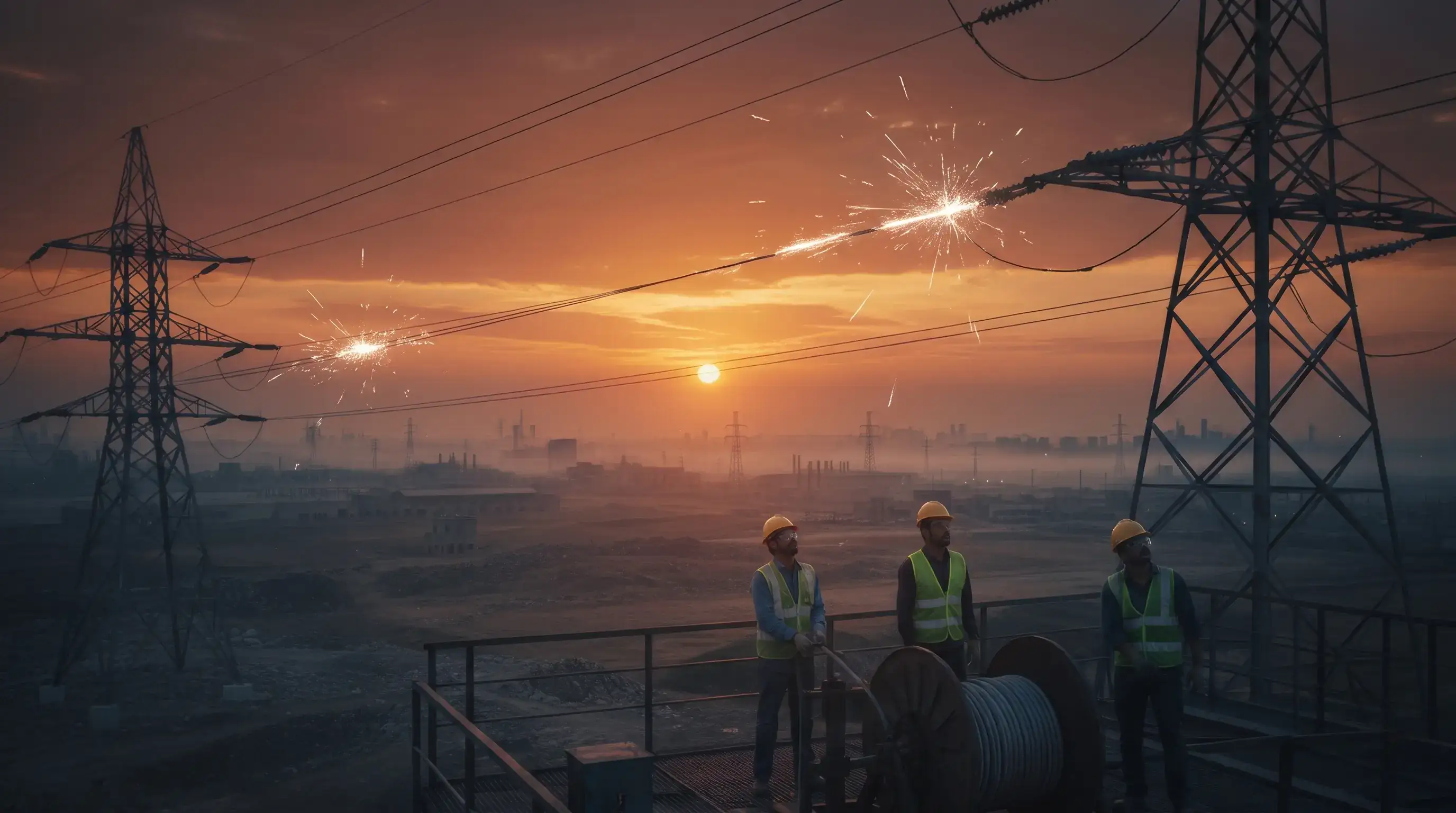
Electrical failures represent one of the leading causes of industrial and commercial fires across Pakistan. From textile mills in Faisalabad to high-rise commercial complexes in Lahore and Karachi, thousands of facilities suffer catastrophic asset losses every year due to poorly designed distribution networks, substandard cabling, and neglected maintenance routines. High ambient summer temperatures, prolonged load-shedding cycles, and erratic supply from power distribution companies (DISCOs) place immense mechanical and thermal stress on electrical components. Ensuring electrical fire safety requires a structured approach that spans three non-negotiable phases: active prevention through sound engineering, early detection through smart monitoring, and rapid containment through localized suppression systems.
The Leading Causes of Electrical Fires in Pakistan
Most electrical fires do not occur spontaneously; they develop over weeks or months as insulation degrades and resistance points generate excess heat. In Pakistan, the prevalence of substandard wiring remains the single largest hazard. Non-certified local cables, often using impure recycled copper and low-grade PVC insulation, cannot withstand rated current loads over extended operating hours. When current flows through high-resistance conductor material, excessive Joule heating ($I^2R$) melts the insulation, creating an ignition source adjacent to building materials or industrial inventory.
Loose terminations within switchboards and motor control centers (MCCs) present another common hazard. Due to thermal expansion and contraction during load shifts, terminal screws lose torque over time. A loose busbar bolt or breaker terminal causes micro-arcing and intense localized heating, frequently reaching temperatures well above 400°C before a conventional circuit breaker trips.
Furthermore, improper load distribution across three-phase systems accelerates phase imbalance and neutral conductor overloading. In many commercial plazas, single-phase air conditioning units are added haphazardly without balancing the phases. This oversaturates the neutral busbar, which rarely features individual overcurrent protection in older installations. The resulting overheating within ceiling plenums or distribution shafts often goes unnoticed until open flames emerge.
Engineering Prevention: Cable Sizing, Breakers, and Thermal Derating
Effective fire prevention begins on the drafting board and during switchgear assembly. In Pakistan, design engineers must account for extreme ambient operating environments. Cable current-carrying capacities must be derated for ambient temperatures that routinely exceed 45°C during peak summer in Punjab and Sindh. A copper cable rated for 100 amperes in laboratory conditions (30°C) may only safely carry 75 to 80 amperes when installed in an unventilated cable tray under direct sunlight or inside a hot industrial plant room. Failure to calculate these derating factors leads directly to thermal runaway.
Circuit protection devices must be selected based on accurate short-circuit calculations rather than arbitrary estimates. Molded Case Circuit Breakers (MCCBs) and Miniature Circuit Breakers (MCBs) should comply with IEC 60947-2 standards. It is critical to differentiate between thermal overload protection and magnetic short-circuit protection. While standard circuit breakers handle gross overcurrents, they do not detect dangerous low-level electrical arcing. Integrating Arc Fault Detection Devices (AFDDs) into distribution panels protects against series and parallel arcing faults, which generate enough localized heat to ignite surrounding dust and plastic enclosures without drawing enough current to trip a standard breaker.
Residual Current Devices (RCDs) or Earth Leakage Circuit Breakers (ELCBs) must also be installed to guard against earth fault currents. While an RCD with a 30mA sensitivity rating protects human life against electric shock, units rated between 300mA and 500mA are designated specifically for fire protection in industrial distribution boards. These units isolate circuits before ground leakage currents generate the thermal energy required to ignite dust, lint, or structural timber.
Grounding Systems and Earth Resistance Thresholds
A flawed grounding system turns minor equipment insulation failures into active fire risks. When an ungrounded or poorly grounded phase conductor shorts against a metal enclosure, the fault current seeks alternative, high-resistance paths back to the source. This stray current generates intense heating across conduits, structural steel, and machine frames, frequently igniting nearby combustible materials.
To maintain fire safety, industrial and commercial earthing networks must be designed to achieve an earth electrode resistance of less than 1 ohm for sensitive industrial setups, and no more than 5 ohms for standard commercial facilities, in line with IEEE 142 standards. In cities like Faisalabad, where the subsoil water table fluctuates significantly between dry periods and monsoon seasons, earth pit resistance must be monitored periodically.
Every distribution board requires a continuous, low-impedance earth continuity conductor (ECC) properly bonded to the main earthing terminal (MET). Using structural steel, metal water pipes, or conduit runs as the sole grounding conductor is a code violation that directly contributes to structural fire outbreaks. Proper copper tape bonding (typically 25x3mm or 25x6mm depending on fault levels) ensures that fault currents instantly travel through designated pathways to clear the protective breaker within milliseconds.
Inspection Protocols: Infrared Thermography and Testing
Preventive maintenance must be driven by measurable diagnostic data rather than visual checks alone. Infrared (IR) thermography is the industry standard for uncovering electrical fire hazards before physical damage occurs. Certified thermographers use high-resolution thermal imaging cameras to inspect distribution panels, transformers, bus ducts, and motor terminals while the facility operates under full load conditions.
Thermal scans pinpoint loose terminations, phase imbalances, internal breaker contact degradation, and overloaded conductors by detecting temperature deltas ($\Delta T$). In standard maintenance protocols, a temperature difference of 10°C to 25°C between similar components under similar load warrants prompt repair, while a difference exceeding 40°C indicates an immediate fire hazard requiring emergency shutdown. An industrial thermographic survey in Pakistan typically costs between PKR 40,000 and PKR 150,000 depending on the number of switchboards, making it an extremely cost-effective safeguard compared to the price of an uncontained fire.
Routine testing must also include insulation resistance testing (megger testing) using test voltages of 500V to 1000V DC. Insulation resistance values for 400V distribution circuits should remain well above 1 Megaohm. If readings drop below this threshold, it confirms that cable insulation has degraded through age, moisture ingress, or thermal stress, signaling that replacement is required immediately.
Early Detection Technologies for Switchgear and Cable Risers
If preventive measures fail, early detection systems minimize damage by providing the critical window needed for controlled shutdown. Standard point-type optical smoke detectors installed on ceiling slabs are often ineffective inside large industrial halls or switchgear rooms with high air-exchange rates; smoke generated inside an enclosed metal panel is diluted before it ever reaches ceiling-mounted sensors.
High-risk facilities should employ Aspirating Smoke Detection (ASD) systems, commonly known as VESDA (Very Early Warning Aspirating Smoke Detection). ASD systems continuously draw air samples through a network of small pipes directly from the exhaust grilles of electrical panels and cable basements. By analyzing air for trace sub-micron smoke particles released during the early pre-combustion breakdown of cable polymers, an ASD system raises alarms hours before visible smoke or open flames develop.
For switchgear cubicles, optical arc sensors connected to high-speed protective relays offer millisecond-level protection. If an internal arc flash occurs, the optical sensor detects the intense light output and signals the main incoming breaker to trip in under 40 milliseconds, containing the blast energy and preventing the ignition of panel switchgear. Linear Heat Detection (LHD) cables should also be routed through vertical cable risers and heavy cable trays. These sensor cables trigger a fire alarm as soon as the temperature along any point of the tray reaches a predetermined threshold (such as 68°C or 88°C).
Fire Suppression in Live Electrical Environments
Water-based sprinkler systems are dangerous in live electrical spaces unless power can be fully isolated beforehand. Applying water to energized high-voltage switchgear creates electrical shock hazards for emergency personnel and leads to irreversible equipment destruction through phase-to-phase short circuits.
Dedicated electrical rooms, data hubs, and control rooms require clean agent automatic fire suppression systems. These systems use non-conductive, electrically safe gases that extinguish fires through heat absorption without leaving chemical residues or requiring cleanup. Common choices include FM-200 (HFC-227ea) and Novec 1230 (FK-5-1-12). In Pakistan, supplying and installing a clean agent system for a standard 20x15-foot switchgear room generally costs between PKR 800,000 and PKR 2,500,000, depending on room volume, cylinder capacity, and whether imported, certified components are specified.
For smaller localized enclosures, automatic direct-release tube suppression systems provide an economical alternative. These systems feature a pressurized polymer tube routed directly through the internal wiring channels of a single distribution panel. When an electrical fire ignites, the flame melts the tube at the hottest point, creating a spray nozzle that discharges clean agent directly onto the source of the fire within seconds. For manual intervention, facilities must keep Class C/E rated fire extinguishers (Carbon Dioxide or dry chemical powder) mounted immediately outside electrical room exits, never blocked by storage crates or temporary materials.
Practical Emergency Response Protocols for Plant Operators
When an electrical fire occurs, operational staff must follow strict, rehearsed protocols to prevent human injury and limit structural damage. The immediate priority is not to deploy extinguishers, but to isolate electrical power safely.
1. Power Isolation: The main upstream breaker or vacuum circuit breaker (VCB) must be tripped immediately. Facility operators should have clearly labeled, accessible emergency power-off (EPO) buttons located away from the switchgear itself. If personnel cannot reach the electrical room due to dense smoke, plant engineers must contact the local DISCO grid station to drop the incoming 11kV feeder line. 2. Evacuation and Alert: Evacuate all personnel from the affected zone. Switchgear insulation releases dense, toxic fumes containing hydrogen chloride, carbon monoxide, and dioxins that can incapacitate an individual within seconds. 3. Targeted Extinguishment: Only trained personnel wearing non-conductive safety gear should attempt manual suppression. Use $CO_2$ extinguishers for smaller panel fires to avoid damaging surrounding electrical contacts. Never apply water, foam, or wet chemical extinguishers to switchboards until an electrical engineer has visibly confirmed isolation and verified that all stored energy in capacitor banks has fully discharged. 4. Post-Incident Safety Audit: Never re-energize an installation after an electrical fire based on a visual cleanup alone. A full insulation resistance test, continuity check, and breaker trip test must be completed by a licensed contractor before re-introducing power to the system.
Abdullah International provides PEC-compliant electrical installations, testing, and switchgear manufacturing engineered to meet these rigorous standards. Industrial and commercial operators must realize that fire safety cannot be treated as an afterthought; it must be designed into every busbar, cable run, and protective relay from day one.
Conclusion
Electrical fire safety requires uncompromising adherence to certified engineering designs, accurate thermal derating, and disciplined testing protocols. Facilities operating in Pakistan face unique challenges, from intense seasonal heat to unstable supply grids, making proactive measures essential rather than optional. To protect your capital investment, inventory, and human lives, schedule an on-site thermal imaging audit and earth resistance test for your primary distribution boards this month, replacing uncertified components before thermal failure occurs.