
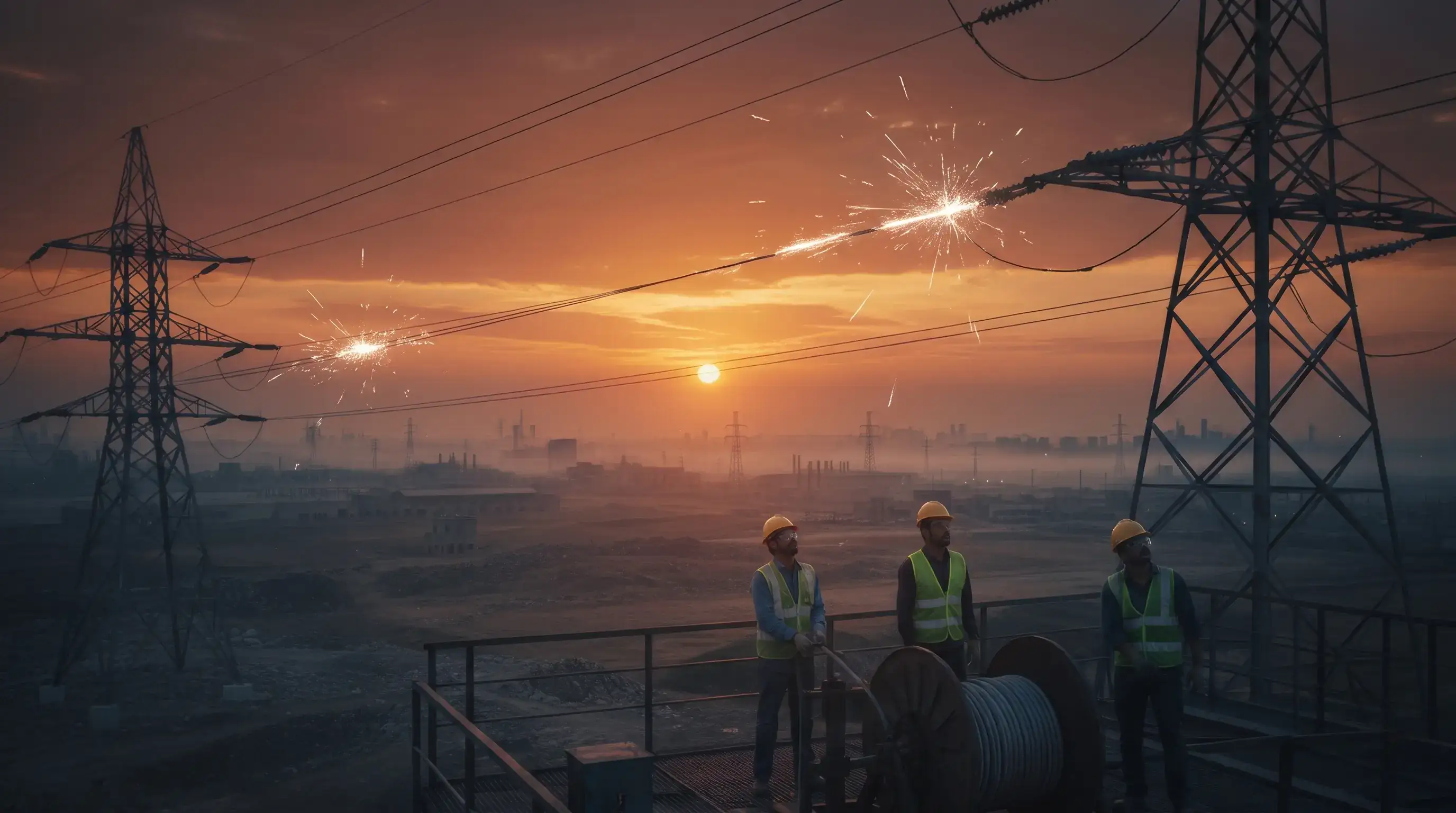
Electrical engineering projects carry inherent financial and physical hazards. Whether executing high-voltage distribution lines, industrial substation erections, or commercial building electrification, contractors operate in environments where an equipment failure or site accident can wipe out profit margins. In Pakistan, regulatory frameworks governed by the Pakistan Engineering Council (PEC) and provincial labor directorates increasingly require formal risk transfer mechanisms before site access is granted.
Securing the proper insurance portfolio protects contractors, sub-contractors, and clients from catastrophic monetary losses. Many contractors view insurance merely as a transactional cost required to submit a tender bid. However, understanding specific policy lines, scope of coverage, and local statutory obligations is essential for safeguarding capital, maintaining business liquidity, and ensuring project completion.
Contractor’s All Risks (CAR) Insurance for Electrical Installations
Contractor’s All Risks (CAR) insurance serves as the foundational umbrella for any physical worksite. In electrical contracting, this coverage protects the contract works during the construction, erection, and testing periods. It guards against accidental physical loss or damage caused by fire, lightning, storm, collapse, transit mishaps, and electrical surges during initial energization. For projects involving large-scale switchgear rooms, high-capacity dry-type transformers, and complex motor control centers (MCCs), the loss of a single component can stall work for months and incur tens of millions of Pakistani Rupees in replacement costs.
A critical element of CAR insurance is the testing and commissioning clause. Switchgear, power transformers, and HT panels face their highest risk profile when power is first introduced. If an insulation fault, installation error, or utility surge from the local distribution company (such as FECO, LESCO, or IESCO) destroys a newly installed panel during cold or hot testing, a standard policy without an explicit testing extension will reject the claim. In Pakistani industrial projects, standard CAR policies should include testing coverage of at least four to eight weeks, depending on the complexity of the power distribution grid.
Furthermore, storage risk must be incorporated. Heavy electrical machinery is routinely delivered to site months before installation. In industrial zones such as Faisalabad’s M-3 Industrial City or Karachi’s Port Qasim, items stored in open or semi-covered yards face water ingress, monsoonal humidity, and theft. Copper busbars and cabling are frequent targets of organized site theft. A CAR policy with appropriate internal theft and transit extensions ensures that materials delivered to the site boundary remain protected until final handover.
Third-Party Liability (TPL) and Public Property Damage
Third-Party Liability (TPL) is generally packaged alongside CAR policies or secured as a standalone public liability policy. Electrical installations present significant external hazards; an arc blast can throw molten metal, or an electrical fire caused by a shorted feeder cable can spread to adjacent industrial machinery or neighboring premises. TPL policies cover legal defense expenses and compensatory damages awarded to third parties for bodily injury, death, or property damage resulting directly from the contractor's operations.
Under standard PEC bidding documents (such as PEC-SBD Works), proof of third-party insurance with predetermined minimum limits is compulsory. For medium-sized industrial contracts ranging between PKR 50 million and PKR 150 million, project owners typically demand TPL coverage limits of at least PKR 10 million to PKR 25 million per occurrence, often with an unlimited aggregate for bodily injuries. If an electrical sub-contractor accidentally severs an underground gas line or triggers an explosion that shuts down a neighboring textile spinning mill, the contractor is legally and contractually accountable for the resulting physical damage.
Without adequate TPL coverage, claims from factory owners or adjacent residents will target the contractor’s operational reserves directly. When establishing TPL limits with local underwriters such as Adamjee Insurance, EFU General, or Jubilee General, contractors must ensure cross-liability clauses are included. This ensures that if the principal contractor damages equipment belonging to the site owner or another independent subcontractor, the policy still responds without disputing who qualifies as an external third party.
Workmen’s Compensation and Employer’s Liability
Electrical construction involves work at height, heavy lifting, and proximity to high-voltage equipment. Despite strict adherence to health and safety protocols, the hazard profile remains high. The Workmen’s Compensation Act 1923, along with provincial mandates managed by institutions like the Punjab Employees Social Security Institution (PESSI) and Sindh Employees Social Security Institution (SESSI), sets strict legal liabilities on employers for work-related injuries, permanent disabilities, or fatalities.
Employer’s Liability and Workmen's Compensation policies shield electrical firms from the financial exposure mandated by labor courts. While PESSI provides healthcare coverage for formally registered workers earning below statutory wage ceilings, high-risk projects involve specialized technicians, testing engineers, and subcontracted daily laborers who may fall outside standard social security safety nets. If an electrician suffers an arc flash burn requiring extensive intensive care treatment, medical costs can easily exceed PKR 1,500,000 at specialized burn centers.
A dedicated policy covers hospital expenses, rehabilitation, temporary total disablement allowances, and statutory lump-sum death benefits, which historically ranged around PKR 500,000 to PKR 1,000,000 under basic statutory schedules, though civil courts routinely award higher amounts under tort claims. Abdullah International adheres to PEC-aligned site safety standards on every installation, but maintaining an active Workmen’s Compensation policy ensures field teams and their dependents are financially protected if an unavoidable accident occurs on site.
Professional Indemnity (PI) Insurance for Design and Engineering
As turnkey and Engineering, Procurement, and Construction (EPC) contracts become the norm across Pakistan, electrical contractors increasingly take on design responsibilities. This includes developing single-line diagrams (SLDs), sizing step-down transformers, selecting fault-current ratings for air circuit breakers (ACBs), and planning earthing pits and lightning protection systems. If an engineering calculation error results in systemic failures, the contractor cannot rely on CAR insurance, which systematically excludes losses arising from defective design.
Professional Indemnity (PI) insurance fills this void by covering claims alleging negligence, errors, or omissions in design and consultancy services. For instance, if an engineering team under-sizes an electrical busbar system for a multi-story commercial plaza, causing chronic overheating, early insulation breakdown, and forced client downtime, replacing that system involves retrofitting walls and structural conduits. The client will sue for both rectifying the hardware and business interruption costs.
PI policies handle the substantial legal fees required to defend complex technical engineering claims in dispute tribunals or arbitration. In Pakistan, multinational corporations, pharmaceutical manufacturing setups, and major textile conglomerates frequently require electrical EPC contractors to present a PI cover policy ranging between PKR 20 million and PKR 50 million. While smaller contracting setups often neglect this coverage due to upfront premium costs, operating without PI leaves the firm's balance sheet exposed to structural design claims.
Contractor’s Plant and Machinery (CPM) Coverage
Electrical installations require expensive testing equipment, specialized tools, and handling machinery. Modern projects rely on calibrated instruments such as primary and secondary current injection test sets, 10kV insulation resistance testers, earth ground testers, thermal imaging cameras, motorized cable pulling winches, and hydraulic crimping stations. An advanced three-phase relay test kit alone costs between PKR 3,000,000 and PKR 8,000,000, and is susceptible to theft, rough transit over unpaved access roads, or operational mishaps.
Contractor’s Plant and Machinery (CPM) insurance covers these movable assets against sudden physical damage or theft, whether the equipment is working, resting, or being dismantled for transport. Standard commercial property insurance only covers assets inside a fixed office or warehouse; once an instrument enters an active construction site, it is excluded unless listed under a CPM or mobile equipment floater policy.
Furthermore, electrical contractors frequently hire boom trucks, scissor lifts, and mobile cranes to hoist 2,000 kVA transformers or run cable trays along high factory ceilings. If a leased crane drops an HT transformer during offloading, disputes between the crane operator’s insurer and the contractor’s insurer can freeze the project. Maintaining a CPM policy that accommodates both owned and hired equipment eliminates contractual impasses and protects expensive testing apparatus throughout the project lifecycle.
Estimating Premiums, Deductibles, and Policy Structuring in Pakistan
Structuring an electrical insurance package requires matching project scale to premium costs and self-insured deductibles (excess). Underwriters evaluate risk based on contract value, scope of works, site security, past loss history, and contractor credentials. With over two decades of technical execution in industrial and infrastructure works, Abdullah International structures risk management profiles to achieve optimal coverage terms and maintain financial accountability.
In the Pakistani market, CAR and TPL combined premiums for standard electrical works typically range between 0.35% and 0.90% of the total contract value. For a PKR 100 million electrification project, the insurance premium generally falls between PKR 350,000 and PKR 900,000. However, contracts involving extensive underground cabling, street lighting across public corridors, or energization of high-voltage systems (132kV and above) will see premiums climb higher due to heightened operational risk.
| Policy Type | Target Coverage Scope | Typical Market Premium Range (PKR) | Average Deductible / Excess | | :--- | :--- | :--- | :--- | | Contractor's All Risks (CAR) | Physical damage, fire, equipment theft on site | 0.35% – 0.75% of contract value | PKR 50,000 – 150,000 per claim | | Third-Party Liability (TPL) | Public property damage and bystander injury | PKR 80,000 – 250,000 per annum | PKR 25,000 – 50,000 for property damage | | Workmen’s Compensation | On-site employee death, injury, and disability | 0.8% – 1.5% of total site wage roll | Nil for statutory bodily claims | | Plant & Machinery (CPM) | Specialized testing tools, winches, analyzers | 1.0% – 2.0% of equipment replacement cost | PKR 25,000 – 100,000 per item | | Professional Indemnity (PI) | Electrical design flaws, calculation errors | 0.5% – 1.2% of design fee value | PKR 100,000 – 500,000 per occurrence |
Contractors must scrutinize deductible structures. A low premium often hides high deductibles. If a policy sets a deductible of PKR 200,000 on electrical equipment breakdown, and a flashover damages a control component worth PKR 180,000, the insurer pays nothing. Contractors must balance premium savings against realistic repair costs in Pakistan's supply chain, particularly when imported switchgear components face lengthy delivery times and fluctuating import duties.
Conclusion
Securing thorough electrical project insurance is not merely a formality for clearing bid submission audits; it is an active risk-management strategy that preserves working capital and contractual integrity. From protecting costly imported switchboards through CAR coverage to safeguarding technicians via Workmen's Compensation, each policy layer addresses a distinct vulnerability on the job site. Review your project scope against these insurance categories before mobilizing equipment, verify that testing and commissioning extensions are written into your terms, and ensure that your deductibles reflect your actual operating cash flow.