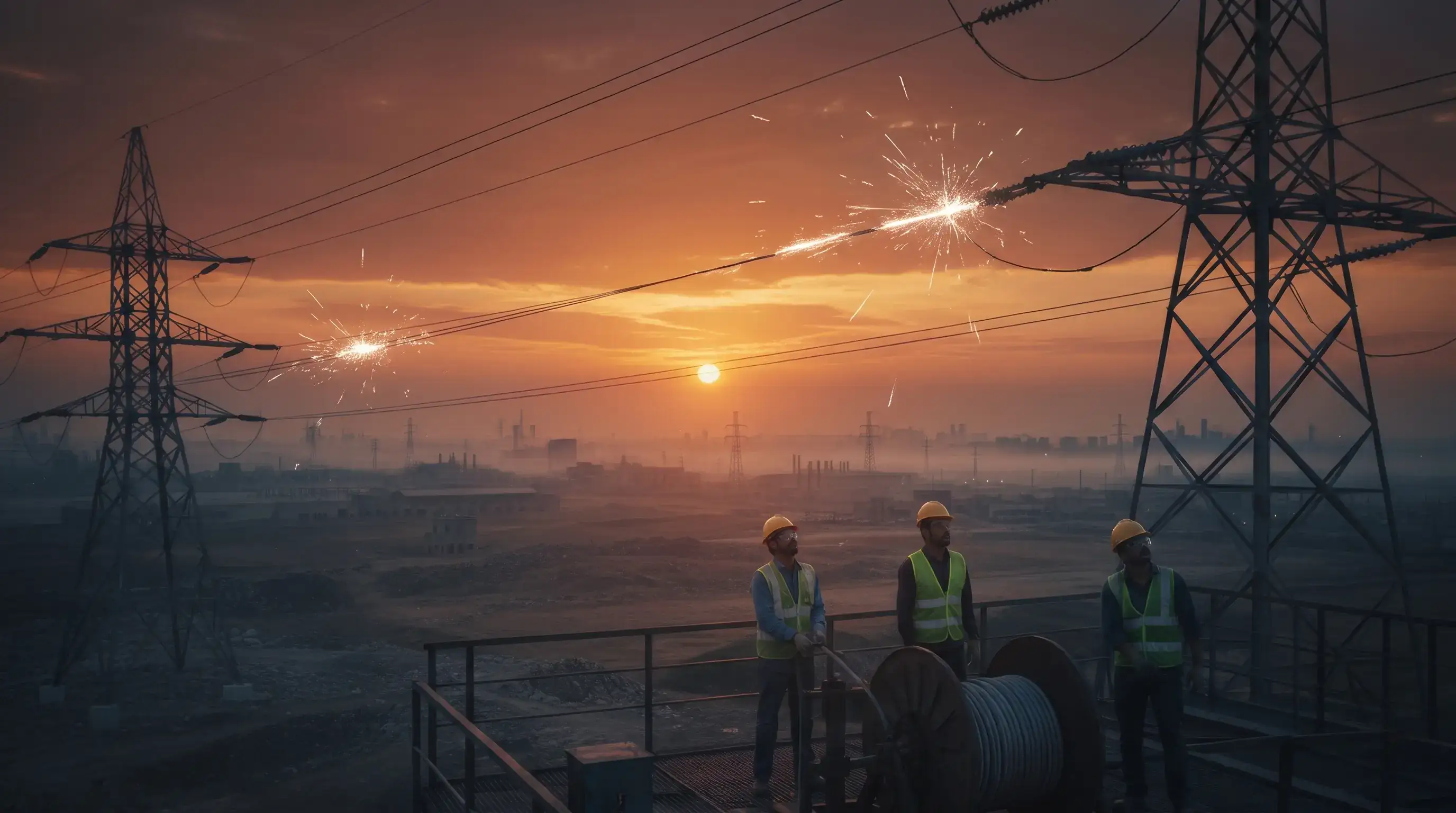
Industrial manufacturing facilities, commercial developments, and utility distribution networks in Pakistan expose thousands of technicians and manual laborers to high-voltage equipment daily. Despite this, informal apprenticeships—commonly known as the *ustad-shagird* model—have historically dominated the local electrical sector. This reliance on undocumented, ad-hoc instruction leads to severe workplace injuries, arc flash burns, and fatal electrocutions. As Pakistani industries face increasing supply chain scrutiny from international buyers and stricter local enforcement, establishing formal electrical safety training aligned with national regulations and global standards like OSHA is no longer optional.
Meeting these obligations requires an understanding of how local legislation intersects with international benchmarks. Implementing structured training programs mitigates physical risk, protects multi-million-rupee machinery, and ensures engineering teams operate within strict statutory compliance frameworks.
The Regulatory Framework for Electrical Safety in Pakistan
Employers operating in Pakistan must navigate both federal precedents and devolved provincial workplace safety acts. The foundational statute, the Factories Act of 1934, includes broad mandates under Chapter III regarding the secure fencing of machinery, precautions against dangerous fumes, and electrical equipment maintenance. However, modern compliance requirements stem directly from provincial measures passed over the last decade.
The Punjab Occupational Safety and Health Act of 2019 sets clear statutory duties for site owners, plant managers, and engineering contractors. Under Section 3 and Section 4 of the Act, an employer must provide necessary information, instruction, and training to ensure the health and safety of all workers at an enterprise. Failing to train staff who service switchgear, motor control centers (MCCs), or transformers exposes directors to civil penalties, factory closures, and potential criminal liability under local judicial magistrates.
In addition to provincial legislation, the Pakistan Engineering Council (PEC) establishes rigorous professional standards for registered contractors. PEC bylaws require licensed operators to maintain certified supervisory staff who understand national building codes and safety norms. Electrical utility operations are further governed by the National Electric Power Regulatory Authority (NEPRA) under its Power Safety Code. NEPRA mandates that distribution companies (DISCOs) like FECO, LESCO, and K-Electric enforce safety training for all line staff and industrial consumers taking supply at 11kV or above.
Benchmarking OSHA Standards and NFPA 70E for Local Facilities
Multinational manufacturing plants and export-oriented textile mills in hubs like Faisalabad, Sheikhupura, and Karachi regularly adopt standards set by the United States Occupational Safety and Health Administration (OSHA). The primary regulation governing electrical worker competence is OSHA 29 CFR 1910.332. This standard specifies which employees require safety training based on their risk exposure, dividing personnel into two distinct classifications: qualified and unqualified persons.
Under OSHA regulations, a qualified person is trained to recognize energized components, calculate nominal system voltages, and determine the exact approach distances specified in NFPA 70E (Standard for Electrical Safety in the Workplace). NFPA 70E establishes arc flash boundary calculations and personal protective equipment (PPE) categories that prevent thermal burns. In contrast, unqualified personnel—such as machine operators, textile weavers, material handlers, and custodial staff—must be trained to identify signs of electrical failure, respect safety barriers, and avoid unauthorized entry into substation rooms.
Bridging the gap between OSHA guidelines and local Pakistani infrastructure requires translating these technical thresholds to common field parameters. For instance, while OSHA mandates safe working clearances around 480V systems, a typical Pakistani industrial facility operates on a 400V/230V three-phase four-wire distribution network fed by an on-site 11kV step-down transformer. Safety curricula must apply NFPA approach boundaries directly to these 11kV distribution units and 400V low-tension (LT) switchboards.
Core Curriculum Requirements for Industrial Electrical Safety Programs
A viable safety training curriculum cannot rely solely on generic lectures. It must deliver verifiable competencies tailored to the specific electrical assets present in the workplace. A compliant industrial syllabus must contain five primary technical modules:
1. Hazard Recognition and Shock Prevention: Instruction on how electricity interacts with the human body, the mechanics of ventricular fibrillation at currents as low as 50 milliamperes (mA), and step-and-touch potential hazards near high-voltage switchyards. 2. Lockout/Tagout (LOTO) Procedures: Isolation protocols aligned with OSHA 29 CFR 1910.147. Workers must demonstrate practical mastery in identifying all energy sources, applying individual padlocks, discharging stored capacitive energy, and executing zero-energy verification tests before touching conductors. 3. Arc Flash Hazard Management: Understanding the differences between an electrical shock and an arc blast. Training covers incident energy calculations (measured in calories per square centimeter), reading warning labels on distribution boards, and selecting rated face shields, balaclavas, and arc-rated coveralls. 4. Use of Meters and Test Instruments: Hands-on training with category-rated multimeters (CAT III and CAT IV). Technicians learn how to inspect meter leads, test for internal fuse integrity, and apply the "three-point test method" (test a known live source, test the target de-energized circuit, and re-test the known live source). 5. Emergency Response and First Aid: Techniques for safely releasing an electrocuted victim from an energized line using non-conductive rescue hooks, immediate administration of cardiopulmonary resuscitation (CPR), and proper use of automated external defibrillators (AEDs).
Differentiating Training for Qualified and Unqualified Personnel
Not all facility employees require identical training content. Attempting to deliver advanced arc flash engineering concepts to general floor workers wastes resources and dilutes core safety messages. Training must be stratified based on operational roles:
### Qualified Electrical Workers This group includes shift electricians, instrument technicians, PEC-registered electrical engineers, and high-voltage maintenance contractors. Their training must be technical, rigorous, and documented. They must show proficiency in reading single-line diagrams (SLDs), using insulation resistance testers (Meggers), calculating cable ampacity derating factors, and safely racking out circuit breakers. Training must occur prior to their first assignment and repeat at minimum intervals of every three years, or whenever new equipment topologies—such as solar photovoltaic systems or variable frequency drives (VFDs)—are integrated into the facility.
### Unqualified Support Workers This category includes mechanical fitters, packaging staff, crane operators, and cleaning crews. These workers do not perform electrical repairs, but their daily routines bring them near electrical equipment. Their curriculum focuses on hazard avoidance: never washing down electrical panels with water, checking extension cables for outer sheath damage, keeping three feet of clear space in front of all distribution boards, and immediately reporting tripped breakers rather than resetting them manually.
Costs and Resource Allocation for Electrical Training in Pakistan
Allocating a dedicated training budget is an operational reality that plant managers must plan for. In Pakistan, the investment required to build an electrically compliant workforce depends on whether training is conducted via in-house certified safety officers or contracted through specialized engineering third parties.
Basic third-party electrical safety training sessions conducted by certified occupational safety trainers typically cost between PKR 25,000 and PKR 50,000 per session for a cohort of 15 to 20 workers. Specialized certifications—such as internationally recognized courses like NEBOSH IGC or OSHA 30-hour general industry programs—range from PKR 110,000 to PKR 190,000 per engineer.
PPE procurement must directly support the training program. Equipping a qualified electrician with an NFPA 70E-compliant 8 cal/cm² arc flash suit, insulated hand tools rated for 1,000V (IEC 60900 compliant), and class 0 dielectric gloves with leather protectors costs approximately PKR 120,000 to PKR 220,000 per kit due to import duties on safety gear. Abdullah International regularly advises industrial clients that the cost of fully training and equipping a four-person maintenance team (averaging PKR 500,000 to PKR 800,000 total) is negligible compared to the millions of rupees incurred through equipment loss, production downtime, and compensation claims following a major short-circuit fire.
Rectifying Common Compliance Gaps in Industrial Plants
Factory audits across domestic industrial zones routinely reveal systematic safety failures. One of the most prevalent is the use of non-standard testing equipment, such as unrated neon test pens or uncalibrated multimeters missing terminal lead guards. Training must explicitly ban unrated instruments on systems above 50 volts.
Another critical deficiency is the bypass of safety interlocks and missing panel blanking plates. Technicians frequently leave high-voltage switchgear doors unlocked or wedge interlock mechanisms open to clear faults quickly during production rushes. Structured safety programs enforce a strict permit-to-work (PTW) culture. High-risk activities, such as working near exposed busbars or terminating heavy-gauge copper cables, should never proceed without a signed permit from a qualified electrical supervisor. Engaging a seasoned engineering partner like Abdullah International to conduct third-party safety audits can help plant operators identify these latent field hazards and bring facilities into alignment with PEC and international codes.
Conclusion
Electrical safety training is neither an informal orientation nor a one-time administrative formality; it is a legally binding obligation that directly impacts industrial operational continuity. By blending OSHA's clear role classifications and NFPA 70E safety boundaries with compliance parameters mandated by the Punjab OSH Act 2019 and PEC guidelines, Pakistani facility managers can systematically eliminate preventable workplace fatalities.
Begin by auditing the exact qualification levels of your plant's maintenance personnel, cataloging all 400V and 11kV electrical assets, and executing a documented, formal training register this quarter to bring your facility into verified regulatory compliance.